
Regulations, certification and safety
Regulations, safety and certification
Professional drone operations take more than a drone and a pilot. Especially when filming in urban areas, controlled airspace or on complex production sites, safety, preparation and regulations are essential.
Drone Chiefs carries out complete drone operations under the European EASA rules, including flight preparation, risk assessment and permit applications. That allows us to fly professionally and safely where a standard drone flight is not possible, such as at events, on industrial sites, in the Port of Rotterdam and inside the CTR of an airport.
Certified for complex drone operations
Drone Chiefs flies in both the Open and the Specific category and holds its own Operational Authorisation (OA), issued by the Dutch Human Environment and Transport Inspectorate (ILT).
With our own SORA procedures and operational authorisation we carry out flights that require extra safety measures and permissions, such as:
• drone operations in urban areas
• flights inside a CTR, including around Schiphol
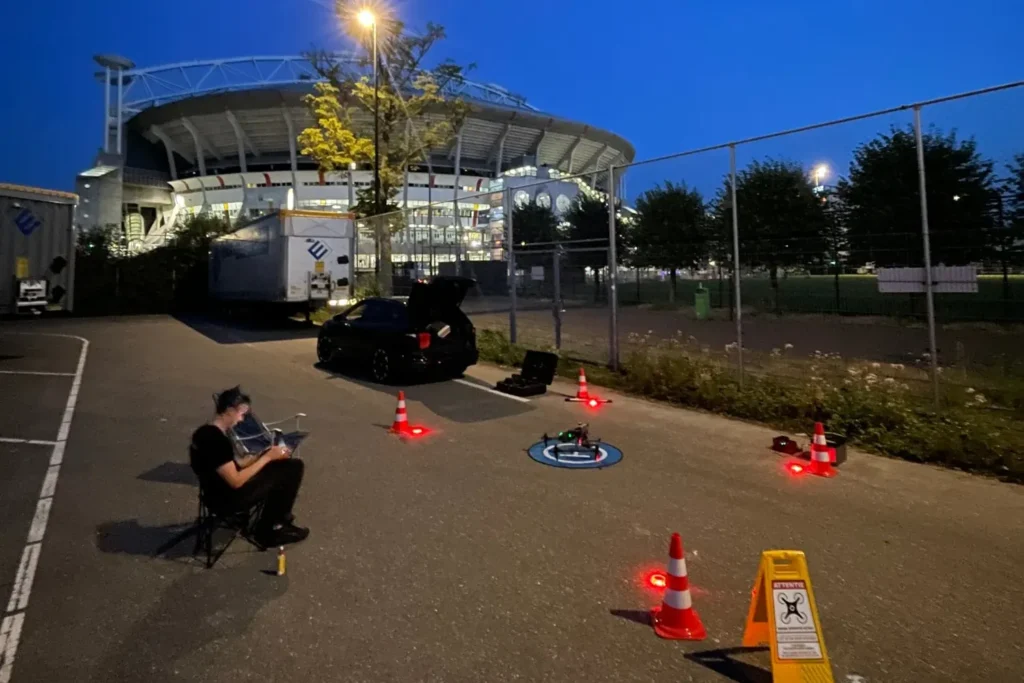
• night flights outside daylight hours
• industrial sites and offshore and maritime
• events and festivals
• international drone operations within Europe


Safety always comes first
Every drone operation starts with thorough preparation. Depending on the location and the flight, we carry out a risk assessment and coordinate with the authorities and airspace managers involved.
Our approach includes:
• flight planning and location analysis
• operational risk assessments (SORA)
• permit and permission applications
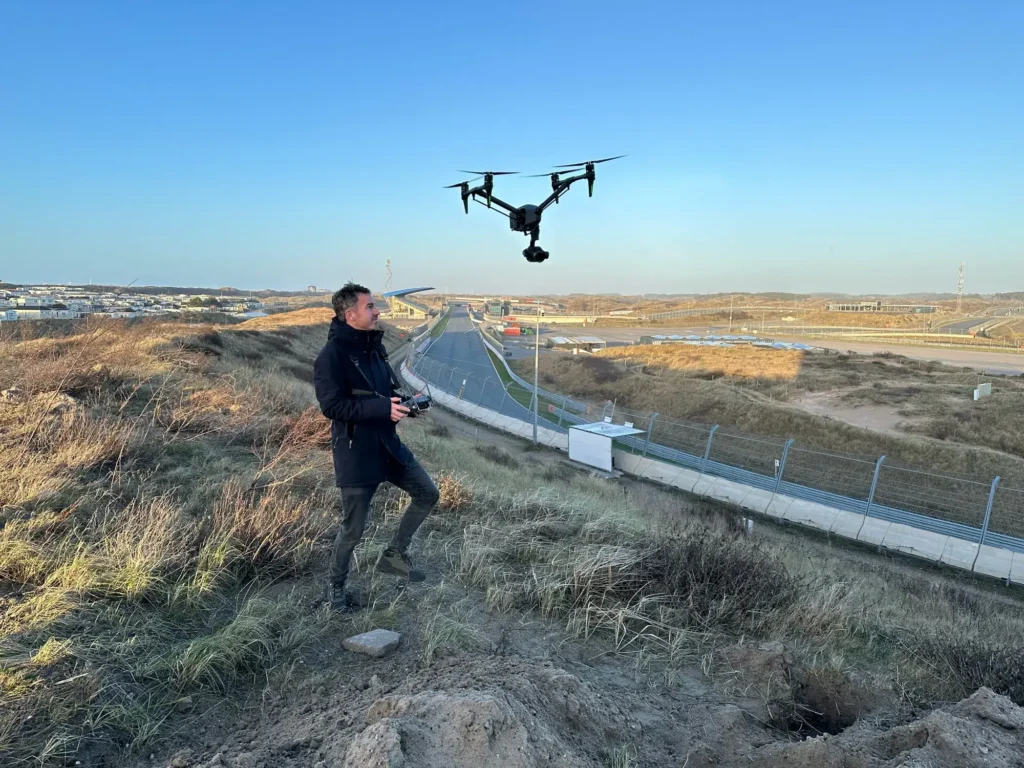
• on-site safety procedures, with a cordoned-off area and observers
• coordination with air traffic control where required
• certified pilots and equipment
We never fly over people and always keep at least 11 metres away from the public.
That way, productions run efficiently and responsibly.
From ROC to the European Specific category
The rules for professional drone flying have changed a lot in recent years. Drone Chiefs has made that transition.
From ROC to EASA regulations
Professional drone pilots in the Netherlands used to fly with an ROC: a national RPAS Operator Certificate. Since 2021, the same rules apply across Europe. They are set by the European Union Aviation Safety Agency (EASA) and divide drone flights into three categories: Open, Specific and Certified.
Drone Chiefs has moved from the old ROC rules to the Specific category. That is the category for commercial flights with a higher risk, such as flying close to people, in controlled airspace or after sunset.
We fly with our own Operational Authorisation (NLD-OAT-041-05G). It allows us to do much more than in the Open category, while staying within the rules.
Supervised by ILT and EASA
In the Netherlands, the Human Environment and Transport Inspectorate (ILT) supervises drone operators. The ILT reviews our procedures and risk assessments and grants the Operational Authorisation. At European level, EASA sets the rules on which that authorisation is based.
For you as a client, that means certainty: you work with an operator that is supervised, insured and has its flights assessed in advance.
The three drone categories explained
There are three categories for drone flights in Europe. Drone Chiefs flies in the Open and the Specific category.
| Category | What does it cover? | Drone Chiefs |
|---|---|---|
| Open | Low-risk flights: drones up to 25 kg, up to 120 metres high, away from people and outside no-fly zones. No permit is needed, but the pilot needs a valid certificate. | ✓ Yes |
| Specific | Higher-risk flights, such as close to people, in urban areas, inside a CTR or in the evening. This requires an operational authorisation from the ILT, based on a risk assessment (SORA). | ✓ Yes, with our own authorisation |
| Certified | The highest-risk flights, comparable to manned aviation, such as carrying people or dangerous goods. | Not needed for film and photo work |
Frequently asked questions about drone regulations
Do I need a permit for drone filming?
Not you as the client. The drone pilot must be certified and registered. At many locations, such as near people, inside a CTR or in another no-fly zone, the Specific category is also required. Drone Chiefs handles the flight preparation and all permissions.
What is the Specific category?
The Specific category is the European category for professional drone flights with a higher risk. It requires an operational authorisation from the ILT. Drone Chiefs holds that authorisation (NLD-OAT-041-05G).
Can a drone fly over people?
No. We never fly over people and always keep at least 11 metres away. At events we use a cordoned-off take-off and landing area and observers.
What is a CTR?
A CTR (Control Zone) is the controlled airspace around an airport, such as Schiphol or Rotterdam The Hague Airport. Flying inside a CTR is only possible with permission from air traffic control. How long that takes depends on the location. Read more about drone filming in a CTR.
Can a drone fly in the evening or at night?
Professional flights outside the uniform daylight period (UDP) require a separate exemption. Drone Chiefs holds one. See night drone filming.
How high can a drone fly?
In the Open category up to 120 metres above the ground. In the Specific category the maximum height depends on the authorisation and the location.
How do I know if my location is in a no-fly zone?
Check the official map at map.godrone.nl, or let us do a free location check.
Who supervises Drone Chiefs?
The Human Environment and Transport Inspectorate (ILT) in the Netherlands, based on the European EASA rules.


